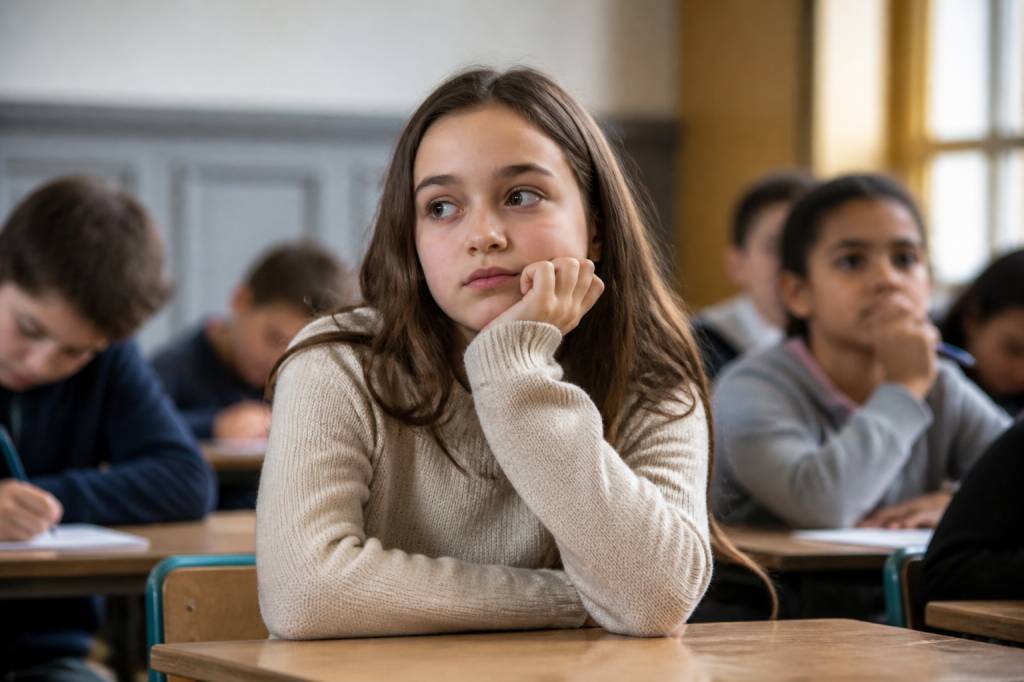
Understanding the stereotypes around French education
French schools often carry a strong image in international conversations. Some people picture strict classrooms, heavy homework loads, and highly formal teachers. Others imagine an education system that is old-fashioned, difficult to enter, or only focused on academic theory. These ideas are common, but they are often too simplistic. Like any national education system, French schooling is diverse, evolving, and shaped by regional, social, and institutional differences.
When people talk about French schools, they sometimes mix facts with assumptions. A student’s experience in a Parisian lycée may be very different from that of a child attending a school in a small town in Brittany or a suburban area near Lyon. Private schools, public schools, international sections, and vocational tracks also create very different realities. Because of this variety, generalizations can easily become myths.
Exploring these common myths is useful not only for families considering education in France, but also for anyone interested in how the system really works. It helps replace vague ideas with a clearer picture of daily school life, academic expectations, student support, and classroom culture.
French schools are all extremely strict
One of the most persistent myths is that French schools are uniformly strict and disciplinarian. While it is true that French education can place strong emphasis on structure, that does not mean classrooms are cold or authoritarian by default. In many schools, teachers maintain clear rules because order is valued as a foundation for learning. However, that does not prevent warm teacher-student relationships, creativity, or collaborative work.
The level of strictness also depends on the school, the age group, and the teacher’s personal style. Younger children may experience a more nurturing and playful environment, while older students may encounter more formal academic expectations. Some schools strongly encourage discussion, projects, and student participation, especially in modern or international programs.
It is more accurate to say that French schools are structured rather than harsh. Students are expected to respect schedules, class rules, and academic standards, but that framework is not necessarily negative. For many families, the structure is reassuring because it creates a predictable and focused learning environment.
French students spend all day doing homework
Another popular myth is that children in France are overloaded with homework every single day. This idea is partly based on the country’s reputation for academic rigor. In reality, homework amounts can vary greatly depending on grade level, school policy, and the teacher’s approach.
Some students do have regular reading, exercises, or revision tasks, especially in secondary school. But the image of French children spending endless hours on schoolwork is exaggerated. In fact, the amount of homework assigned in France has been debated for years, and schools often try to balance academic expectations with family time and extracurricular activities.
There is also a difference between homework and study habits. French students are often encouraged to review lessons, memorize key concepts, and prepare for tests independently. This can create the impression of a heavy workload even when the actual volume of assignments is moderate. The emphasis on self-discipline may feel intense to some international families, but it is not the same as constant homework.
French schools are outdated and resistant to change
Some people assume that French schools are stuck in the past and have not adapted to modern education. This myth comes from the country’s strong academic traditions, but it does not reflect the full reality. Like many education systems, French schools have evolved significantly in recent decades.
Digital tools, bilingual programs, project-based learning, and inclusive education practices are now part of many institutions. Teachers increasingly use interactive methods, online resources, and cross-disciplinary approaches. In some schools, students work on presentations, group projects, and digital assignments that would have been less common in the past.
At the same time, French education still values fundamentals such as reading, writing, reasoning, and mathematical precision. Some observers interpret this as resistance to change, but it can also be seen as a commitment to strong academic foundations. Rather than being outdated, the system is better described as traditional in some areas and innovative in others.
All French schools are the same
It is easy to talk about “French schools” as if they were one single model. In reality, the system is varied. Public schools, private schools, religious schools, international schools, and specialized institutions all exist within the French landscape. Each has its own atmosphere, expectations, and student profile.
Public schools follow the national curriculum and are attended by the majority of students. Private schools may offer different teaching environments, smaller class sizes, or specific pedagogical approaches. Some schools emphasize language learning, while others focus on science, arts, or vocational training. International schools often cater to multilingual families and may offer curricula that differ from the standard French system.
Because of this diversity, it is impossible to make one simple statement about French education that applies to every child. Parents researching schooling in France should consider the exact institution, not just the country as a whole.
Language barriers make French schools impossible for non-native speakers
This myth can discourage families before they even explore their options. It is true that French is the main language of instruction in most schools, and that can be challenging for children who are not fluent. However, many schools are experienced in supporting students who are still learning French.
International sections, bilingual programs, language support classes, and adapted integration pathways can help students transition more smoothly. Younger children often learn the language quickly through daily immersion, while older students may need more structured support. The availability of help depends on the region and the institution, but non-native speakers are not automatically excluded.
For families who want a smoother transition, choosing the right school is essential. It may be useful to explore options on the french school page when comparing different educational environments and understanding how students can adapt to French-language settings.
Although learning in French can be demanding at first, it also offers a major advantage: children often become bilingual or multilingual faster when surrounded by everyday exposure. Instead of being an impossible barrier, language can become an opportunity for long-term academic and personal growth.
French schools do not encourage creativity
Another common assumption is that French education focuses only on memorization and gives little room for creativity. This stereotype likely comes from the strong emphasis on logic, grammar, essay writing, and structured argumentation. Yet creativity is present in many parts of the curriculum.
Art, music, literature, theater, and project work are widely included in school life. Even in academic subjects, students are often asked to develop original arguments, compare ideas, solve problems, and express independent opinions. French teachers may not always use the same classroom style as educators in other countries, but that does not mean imagination is absent.
In many cases, creativity is just expressed differently. Rather than focusing only on open-ended expression, French schools may encourage creativity through disciplined thinking, precise language, and structured debate. This can be particularly strong in subjects like philosophy, literature, and history.
- Creative writing and analysis in language classes
- Artistic activities in primary and secondary school
- Presentations and group projects in many subjects
- Theater, music, and cultural events in school life
- Problem-solving and reasoning in mathematics and science
Students in France are under constant pressure
It is true that academic standards in France can be demanding, especially as students advance through secondary school. Examinations, written assessments, and oral evaluations are important parts of the system. Still, the idea that students are under constant unbearable pressure is too broad.
The experience varies greatly by age and by school track. Primary students usually enjoy a relatively balanced routine, with a focus on basic skills, social development, and daily structure. Pressure tends to increase in later years, especially when students prepare for major exams or decide between different academic and vocational paths.
Parents and teachers also play an important role in managing stress. Many schools pay close attention to student well-being and offer guidance, tutoring, counseling, or adapted learning support when needed. While the system can be demanding, it is not accurate to portray every French student as overwhelmed all the time.
French teachers are distant and not supportive
Some outsiders imagine French teachers as highly formal, reserved, and emotionally distant. This myth may come from the classroom style, where authority and respect are often emphasized. However, a teacher who maintains discipline is not necessarily unsupportive.
In many French schools, teachers are deeply committed to their students’ progress. They may provide detailed feedback, extra help, and strong academic guidance. The relationship may appear less casual than in some other countries, but that does not mean care is missing. Support may be shown through high expectations, careful correction, and direct advice.
Teachers also work within a system that values expertise and subject knowledge. Their role often includes helping students think critically, write clearly, and build independent study habits. For many families, this professionalism is a strength rather than a weakness.
Only top students succeed in French schools
Some people believe that French schools mainly serve highly academic students and leave others behind. This is another oversimplification. The French system includes different pathways designed to meet different needs and interests. Students are not all expected to follow the same academic route.
Vocational education, technical programs, and practical training exist alongside traditional academic tracks. These options allow students to build skills that match their strengths and career goals. In many schools, the goal is not to create one perfect type of student, but to help each learner find a suitable direction.
Of course, like any education system, there are challenges. Some students need extra support, and some pathways may still be viewed as more prestigious than others. But saying that only the “best” students can thrive in French schools ignores the breadth of opportunities available.
French school life is only about academics
It is easy to focus on exams and classroom work when discussing French education, but school life includes much more. Sports, clubs, school trips, cultural events, and social activities are part of the experience in many institutions. These elements help students build confidence, relationships, and a sense of belonging.
Schools often celebrate literature, history, national events, and artistic expression. Field trips and educational outings are common in many places, giving students a chance to learn beyond the classroom. Some schools also organize competitions, debates, science projects, and community initiatives.
This broader view matters because education is not only about academic performance. French schools, like schools elsewhere, also aim to shape social skills, civic awareness, and personal development. Students are not just preparing for tests; they are learning how to live and work with others.
Public opinion often misses the real diversity of the system
Many myths survive because people repeat simplified stories without seeing what French schools actually look like from the inside. Media images, international comparisons, and personal anecdotes can be useful, but they rarely tell the whole story. The reality is more nuanced.
French education includes old traditions and new methods, strong academic expectations and student support, formal classroom structures and room for creativity. It includes children from many backgrounds, families with different goals, and schools with varied identities. When people recognize that diversity, they start to see why broad myths are so misleading.
For parents, students, and educators, the best approach is to look beyond stereotypes and focus on the specific school, region, age group, and program. That is where the true picture appears: not a single rigid model, but a wide educational landscape shaped by history, policy, and local realities.
What people should keep in mind when evaluating French schools
Anyone interested in French education should keep a few practical points in mind. First, not every school follows the same culture or teaching style. Second, language support and integration options may vary, so it is important to research carefully. Third, academic rigor does not necessarily mean lack of kindness or flexibility.
It is also helpful to speak with current families, read school descriptions, and understand the difference between public, private, and international options. A school that seems strict on paper may feel supportive in practice. A school that appears modern may still maintain traditional expectations. Personal experience often reveals more than broad opinions ever could.
- Research the exact school, not just the country
- Ask about language support if French is not your child’s first language
- Look into academic tracks and extracurricular opportunities
- Compare classroom style, student support, and school culture
- Speak with families who already know the system
By replacing myths with facts, it becomes easier to understand the real strengths and challenges of French schools. The system is not perfect, and no education model is. But it is far more varied, adaptable, and human than the stereotypes suggest.