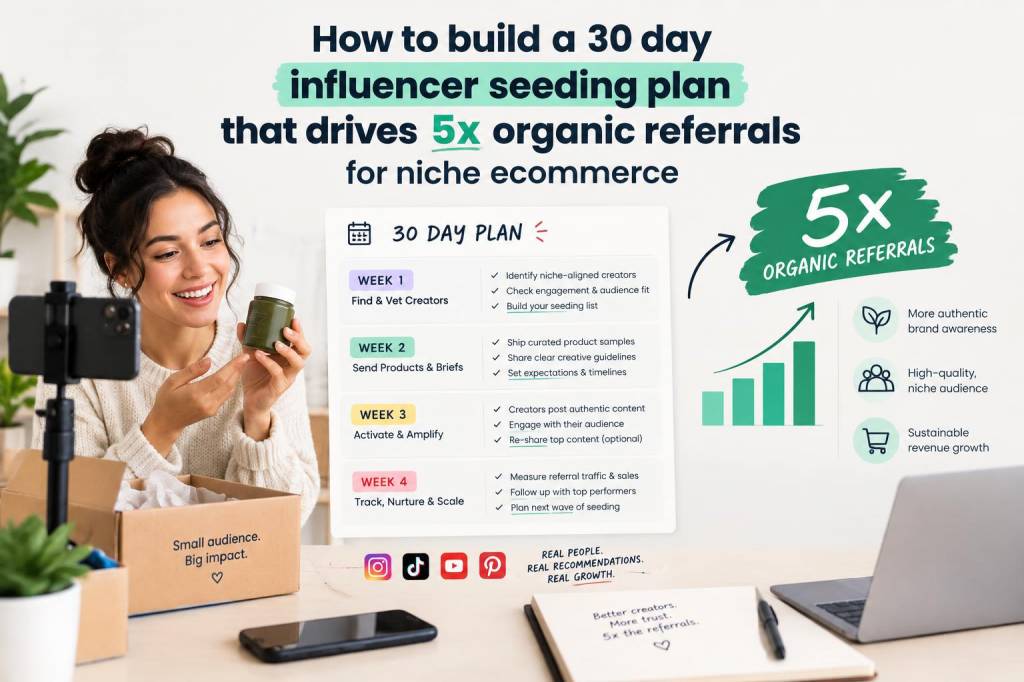
When I built my first influencer seeding campaign for a niche ecommerce brand, I had one clear objective: generate sustained, organic referral traffic that actually converts. What surprised me was how much a focused 30-day plan—designed around relationships, storytelling, and metrics—could multiply referrals without relying on paid shoutouts. Below, I’ll walk you through a practical, day-by-day approach I’ve used and refined to drive up to 5x organic referrals for niche ecommerce stores. This is hands-on, no-fluff guidance you can apply whether you sell artisan skincare, specialty coffee, or boutique outdoor gear.
Why a 30-day seeding plan works
Short campaigns often attract attention, but they don’t create momentum. Thirty days is long enough to build genuine relationships with creators, test messaging, and generate authentic content that resonates with niche audiences. In my experience, three elements matter most:
Precision—target the right micro-influencers with highly engaged followers.Value—give creators something unique and worth sharing (product + story + support).Measurement—track referrals and iterate quickly.Before day 1: prep and targeting
Preparation typically takes me 3–7 days. Don’t skip this. A rushed selection of influencers leads to low-quality content and poor referral rates.
Define your ideal customer persona and list the top 3 pain points your product solves for them.Set clear KPIs: referral traffic, conversion rate from referred visitors, and content reach. I aim for a 5x increase in organic referrals versus baseline—this is ambitious but achievable with the right targeting.Assemble creative assets: product photography, key messaging points, unique discount codes or UTM links, and an influencer welcome kit PDF explaining the brand story.Choose your tracking system: Google Analytics with UTM parameters, a dedicated affiliate/referral platform (e.g., Refersion, Tapfiliate), or Shopify’s built-in tracking for small stores.Day-by-day 30-day plan (overview)
Below is the simplified 30-day timeline I use as a framework. The table shows major milestones; beneath it I unpack each phase with actionable steps.
| Days | Focus | Output |
| 1–3 | Outreach & selection | Confirm 15–30 micro-influencers |
| 4–10 | Onboarding & seeding | Ship products + send briefing |
| 11–18 | Content creation support | Draft content approvals, story angles |
| 19–25 | Amplify & incentivize | Cross-promotion, contests, UGC pushes |
| 26–30 | Analyze & iterate | Referrals report + next steps |
Outreach & selection (Days 1–3)
I target micro-influencers (5k–50k followers) because they typically have the highest engagement and trust in niche markets. My process:
Use discovery tools—Instagram search, TikTok, BuzzSumo, Heepsy—or manual hashtag hunting relevant to the niche (e.g., #singleorigincoffee, #minimalistskincare).Vet metrics: engagement rate (likes + comments / followers) above 3–4% is ideal; look at comment quality to ensure audience authenticity.Prioritize creators who already post about similar products—this reduces the education needed and increases likelihood of authentic content.Outreach script (short, personalized): “Hi [Name], I love your post about [specific post]. I work with [brand], and I think our [product] would resonate with your audience. Would you be open to trying it? We’d love to send a sample and collaborate on an authentic story.”
Onboarding & seeding (Days 4–10)
Seeding is more than shipping a product. It’s about building an experience that creators want to share.
Ship a branded package with a personal note and one-pager explaining the brand mission and suggested story angles. Include clear tracking links or unique coupon codes to attribute referrals.Offer a choice of creative angles—honest review, how-to tutorial, before/after, or “why I switched.” Creators appreciate freedom but like guidance.Set expectations: preferred publish window, usage of UTM codes, and how to tag your brand. Be clear but flexible.Content creation support (Days 11–18)
Now you need content to appear. Don’t ghost creators after sending products. I maintain momentum by helping them create.
Provide mood boards or short script ideas, but never micromanage. Micro-influencers want authenticity.Offer small creative fees for photographers or videographers if creators lack production resources—this can dramatically boost content quality.Encourage multiple formats: one main feed post, one story with swipe-up/CTA, and one short-form video. The combination drives referral clicks.Amplify & incentivize (Days 19–25)
This is when referral spikes occur if you’ve done the groundwork. Time to multiply reach.
Run a small cross-promotion: share creators’ posts on your brand account, feature best pieces in an email newsletter, and pin top content on your homepage.Launch a short referral contest: the creator with the highest tracked referrals wins a prize—this gamifies performance without paying for followers.Consider a limited-time bundle or exclusive discount for the influencer community to drive urgency and track conversions.Analyze & iterate (Days 26–30)
Measure everything. Look at referral traffic, conversion rate, average order value from referred customers, and lifetime value if possible.
Identify top-performing creators and content types. Often, a 5–10% of creators drive most referrals—double down on them for the next wave.Collect qualitative feedback from creators: what their audience asked, how they felt about the product, and if they’d like to collaborate again.Prepare a short report with insights (what worked, what didn’t) and a re-seed plan for the next 30–60 days.Conversion tips that multiply referrals
Driving clicks is one thing; turning them into customers is another. I focus on:
Landing pages tailored to influencer traffic with matched messaging and visuals.Simple, trackable CTAs—unique coupon codes and UTM-tagged links for each creator.Fast follow-up flows: a welcome email sequence for referred customers with social proof and a small upsell offer.What to expect and how to scale
In my campaigns, a 30-day seeding plan often yields a 2–5x increase in organic referrals depending on product fit, creator quality, and the offer. To scale beyond that:
Double down on top performers with longer-term ambassador partnerships.Invest in content repurposing—turn creator videos into ads, product pages, and emails.Automate tracking and communications with an influencer CRM to manage relationships at scale.If you want, I can help you map this plan to your specific niche—review your customer persona and current metrics, and I’ll recommend which influencers to target and how to structure your tracking for measurable growth. Visit Market Research at https://www.market-research.uk for more templates and case studies I’ve used to get consistent results.